Building Your First Portable Station: POTA, SOTA, and the Field Kit
Portable operating turns a hobby into an adventure. Here is how to build a lightweight, reliable HF station that fits in a backpack and works from any hilltop.
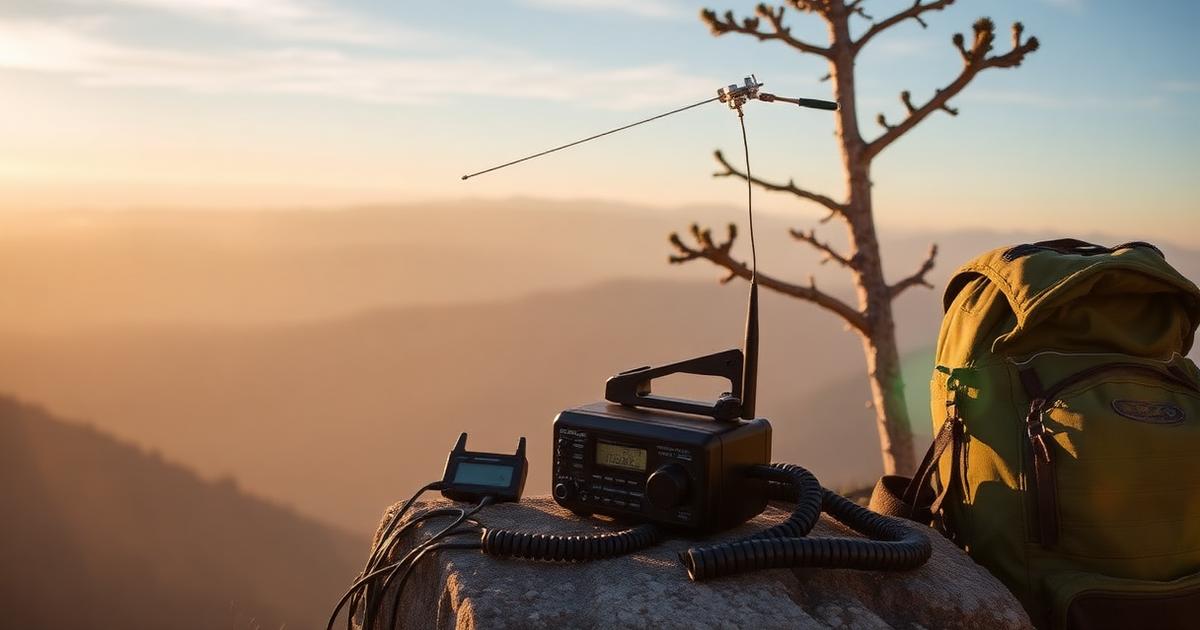
Why portable operating is a whole different hobby
Ham radio, done at home, is a hobby of comfort. You have a fixed antenna at a known height, a legal-limit amplifier if you want one, unlimited electrical power, and a chair that reclines. Portable operating strips all of that away. You get whatever antenna you can carry, whatever power your battery holds, whatever propagation the ionosphere gives you, and often, whatever weather the summit throws at you. Almost every operator who tries a proper portable outing comes back changed. It is the same equipment on paper, but the experience of making a contact from a mountaintop with five watts and a wire antenna feels categorically different from making the same contact from a heated shack.
Two programs have driven the modern surge in portable amateur radio. Parks on the Air, or POTA, awards contacts made from public parks and protected areas. Summits on the Air, or SOTA, does the same for named summits. Both maintain public spotting networks, active social communities, and simple award structures that reward regular activity. Between them they have created something the hobby did not really have a decade ago: a nationwide, self-organizing calendar of operators sitting on picnic tables and mountain summits, waving small radios at each other across the continent.
The three-pound rule
Every experienced portable operator eventually converges on a version of the same rule: the entire station, minus the power source and the antenna wire, should fit in a small pouch and weigh under three pounds. Anything heavier gets left at home after the first tough hike. Meeting that rule takes discipline about the radio you choose, the accessories you carry, and, most importantly, the cables you do not carry.
A modern QRP transceiver capable of five to ten watts on all HF bands can weigh under a pound. Add a small wire antenna, a lightweight coax jumper, a compact battery, and a small paddle or microphone, and you are still comfortably under the target. The temptation to bring a tuner, an amplifier, a laptop, a headset, a spare radio, and a full logging setup is real, and it is exactly how a fun three-mile hike turns into a miserable one.
The antenna is more than half the station
For portable HF work, two antennas dominate the field. An end-fed half-wave with a small transformer at the feedpoint is a resonant, no-tuner, single-wire antenna that covers three or four bands with a single length of wire. It throws easily into a tree, works well when only one end can be supported, and packs into a pocket. A linked dipole is heavier but gives cleaner performance and is easier to model. Either one, hung as high as a nearby tree allows, will radiate far better than any compromise antenna advertised as portable.
The single biggest mistake portable operators make is running too much coax to a low antenna. Twenty feet of coax between the radio and a well-placed antenna will beat a hundred feet of coax to a beautifully engineered feedpoint every single time. Keep the run short. Keep the antenna high. Everything else is optimization.
Power, batteries, and the reality of QRP
A four-amp-hour lithium iron phosphate battery weighs about a pound and will run a five-watt radio for a full afternoon of casual operating with plenty of margin. The temptation to bring a larger battery for insurance is another version of the three-pound rule violation. In practice, most portable sessions end because the operator gets cold, hungry, or bored well before the battery does.
QRP power, meaning five watts or less, is the standard for portable work, and it is much less limiting than it sounds. The received signal difference between five watts and a hundred watts is thirteen decibels, roughly two S-units. On a well-placed antenna into a decent propagation path, five watts will consistently work continents. On the same setup at home, that same five watts through a compromise antenna in an urban lot might not work the next town over. The variable that matters most is not power. It is antenna placement and location noise floor.
Logging in the field
Paper works. A small notebook, a mechanical pencil, and a habit of writing every contact as it happens will never fail, never run out of battery, and never get accidentally overwritten. Later, at home, you can transcribe to your logging software of choice in ten minutes. Many portable operators use a phone-based logging app for convenience, but even they carry paper as a backup. The HAMSTATION browser-based logbook is a comfortable middle ground for a park bench where you have a phone or tablet with you.
What to bring, in one honest list
A radio. An antenna wire in a small winder. A twenty-foot coax jumper. A battery with the right power connector. A charger for after the trip. A small paddle, if you operate CW. A microphone or a headset with mic, if you operate voice. A notepad and pencil. A hat and a jacket appropriate to the weather. Water. Snacks. That is the whole kit. Everything else is optional and, in most cases, unnecessary.
The habit that hooks people
Try one afternoon in a nearby park with a five-watt radio, thirty feet of wire, and no other agenda than to make ten contacts. Announce your activation on the POTA spotting page and watch what happens. Within minutes, hunters from all over the country will be calling you, and you will discover that your name and location are being logged by strangers whose day just got a little more interesting because you decided to sit under a tree. That first activation is how most portable operators get hooked, and it is why the parking lots of state parks on weekend mornings now contain small radios and long wires stretched between picnic shelters. The barrier to entry is one afternoon and one small radio. The reward is a version of the hobby that turns every road trip and every hike into an opportunity to be on the air.
Every HAMSTATION tool runs entirely client-side. No accounts, no tracking, no server storage.
Open the toolkit →