Getting Started with Amateur Radio: A Complete Beginner's Roadmap
From your first study session to your first on-air contact, here is exactly what to expect when you decide to become a licensed ham radio operator.
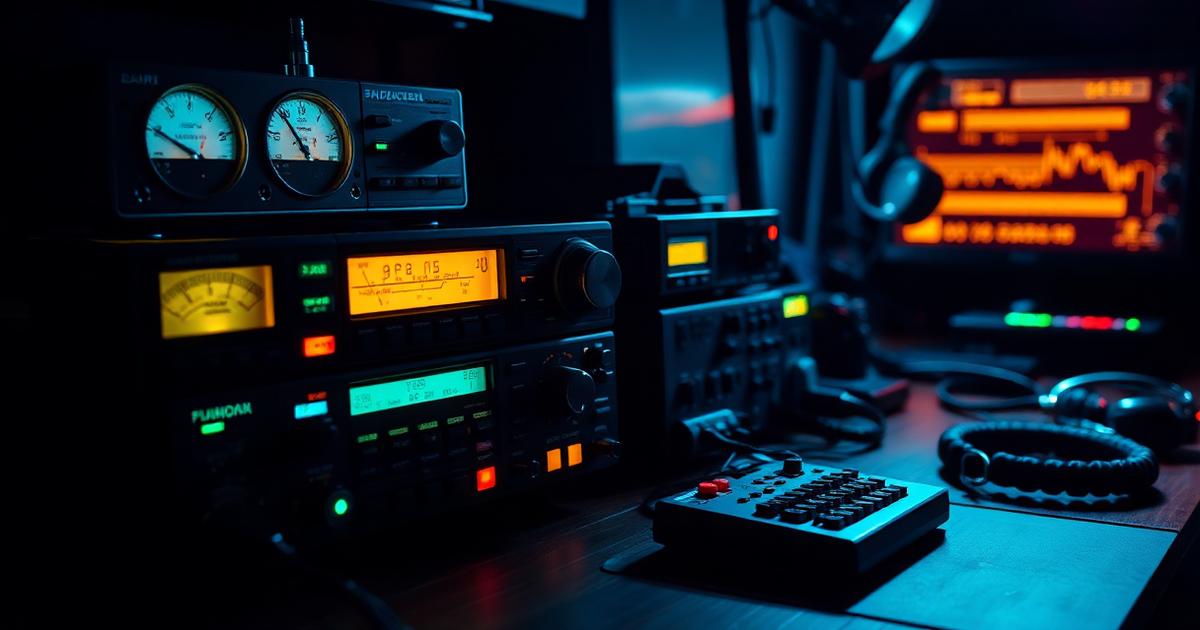
Why amateur radio still matters in 2026
In an era of always-on connectivity, it is fair to ask why anyone would spend a weekend studying for a radio license. The honest answer is that amateur radio does something the commercial internet cannot: it lets you build the network yourself, understand every layer of it, and keep talking when everything else goes dark. When storms flatten cellular towers, when the fiber gets cut, when the power grid gives up for a week, licensed operators are still on the air, coordinating aid, checking on family, and passing traffic across continents with nothing but a battery and a length of wire. That is not nostalgia. It is a working, tested, globally coordinated backup for civilization, and it belongs to anyone willing to learn.
Beyond emergencies, amateur radio is one of the last hobbies that rewards depth in every direction you choose to look. You can spend a lifetime chasing rare DX entities across the HF bands, or bouncing signals off the moon on 1296 MHz, or writing your own software-defined radio in a browser. You can build a station on a $60 budget and still make friends on three continents in a single evening. The community is small, patient, and unusually generous with newcomers, because everyone remembers being one.
Step 1: understand what a license actually gives you
In the United States, the FCC issues three amateur classes: Technician, General, and Amateur Extra. Every other country has a similar tiered structure under the ITU framework. The Technician gets you full privileges on the VHF and UHF bands, which is where local repeaters, satellites, and most emergency communication happens. The General class opens up the HF bands where worldwide propagation lives. The Amateur Extra unlocks the remaining slivers of the HF spectrum and is largely a matter of pride, contests, and a deeper theory exam.
Most operators start with Technician and upgrade to General within a year, once they have felt the pull of the shortwave bands. There is no age requirement, no citizenship requirement in most countries, and no morse code test anywhere in the world since 2007. The exam fee is small, the study material is free, and the license itself is valid for ten years.
Step 2: study smart, not long
The Technician exam is 35 multiple-choice questions drawn from a public pool of about 400. That means you can, in principle, memorize the entire test. Do not do that. Instead, work through a structured book or free online course for the theory, then use a question-pool trainer for the last week of review. Two evenings a week for six weeks is plenty for most adults.
The topics fall into four buckets: operating rules and privileges, basic electrical and radio theory, station equipment and antennas, and safety. If you can already read a schematic and know the difference between AC and DC, half the material will feel obvious. If not, focus first on Ohm's law, decibels, and the difference between frequency and wavelength. Those three ideas underpin every other question on the exam.
Step 3: buy the cheapest radio that will actually get used
The single biggest mistake new hams make is spending too much on their first radio. A $30 handheld transceiver on 2 meters and 70 centimeters is enough to check into local nets every night for a year, learn repeater etiquette, hit satellites overhead, and decide whether the hobby has hooked you. Only after that should you spend real money on an HF rig.
When you are ready for HF, look for a used 100-watt transceiver from a mainstream manufacturer, hook it to a resonant wire antenna in the backyard, and you have a station that can reach every continent when the propagation cooperates. A tuner, a good coax run, and a proper ground are worth more than any premium radio feature.
Step 4: get on the air and be a little brave
The hardest part of amateur radio is the first transmission. Every licensed operator remembers keying the microphone for the first time, saying their call sign, and waiting for an answer that felt like it would never come. It always does. Repeaters exist precisely so beginners have a low-pressure place to practice. Announce your call sign, listen, and let someone else start the conversation. Within a month you will have a small circle of regulars who recognize your voice.
The community has one unwritten rule that carries the whole hobby: help the next person up. When a new call sign appears on the local net, someone will offer an Elmer, the traditional term for a mentor. When you have been licensed for a year, you will be expected to do the same. That reciprocity is why amateur radio survives.
What to do next
Bookmark the HAMSTATION tools page and get comfortable with the frequency-to-wavelength calculator, the Maidenhead locator, and the antenna length calculator before your first build. Read one article on grounding before you install any outdoor wire. And find a local club, in person if possible, because the fastest way to learn is to sit next to somebody who has already made the mistakes you are about to make. Ten weeks from now, you will be the one answering somebody else's first CQ.
Every HAMSTATION tool runs entirely client-side. No accounts, no tracking, no server storage.
Open the toolkit →