Emergency Communications: When the Grid Goes Down, You Are the Grid
Real emergency communications is quiet, unglamorous, and mostly about being reliable. Here is how to prepare a station that will still be on the air on day seven.
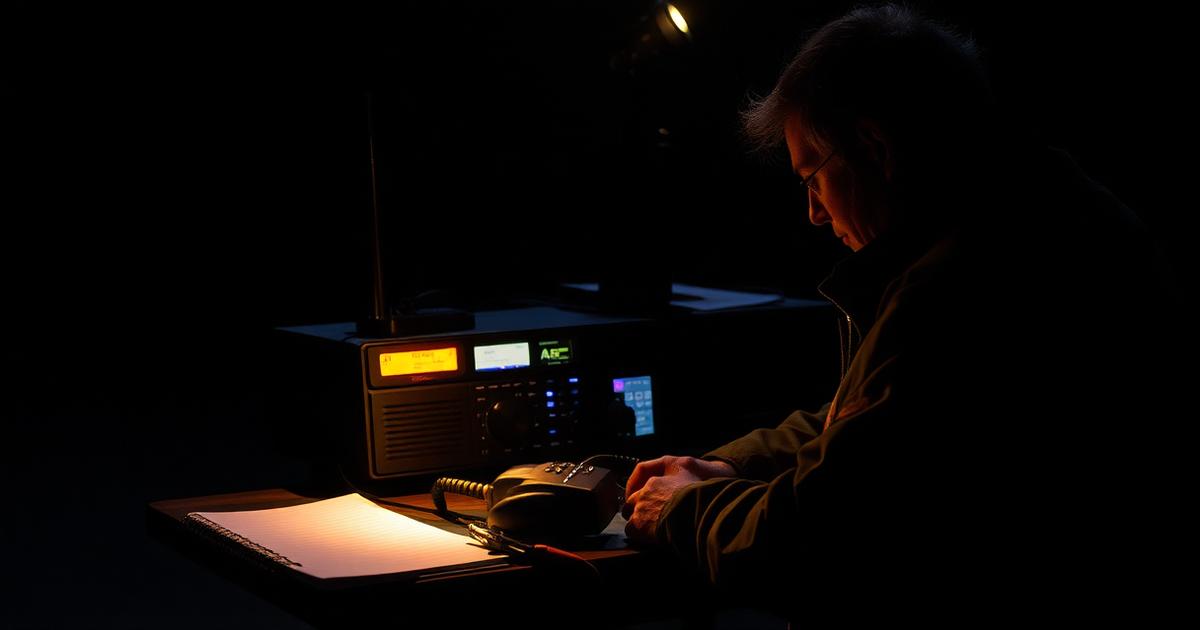
What emergency communications actually looks like
Popular culture likes to imagine that ham operators during disasters are heroic figures barking orders across the airwaves while helicopters circle overhead. The reality is quieter and much more useful. A working emergency network is mostly people passing routine health-and-welfare messages between families who have lost cellphone service, coordinating with shelter staff about how many cases of water are needed, and relaying between served agencies whose primary systems are overloaded. It is boring, it is important, and it is the reason volunteer amateur radio organizations still exist alongside multi-billion-dollar commercial infrastructure.
The organizations doing this work in North America are ARES, the Amateur Radio Emergency Service, coordinated with the ARRL; and RACES, the Radio Amateur Civil Emergency Service, coordinated with local emergency management. Both operate in tandem during declared emergencies, and both welcome licensed operators willing to train, drill, and show up.
The single most important attribute is reliability
During an emergency, the served agency does not care about your ten meter antenna or your homebrew amplifier. They care about whether the message they hand you is going to be delivered accurately to the correct recipient within a reasonable time. Every drill, every net check-in, every practice message pad is training for that one skill. The operators who become trusted are not the ones with the best equipment. They are the ones who show up every Tuesday for the weekly net without fail, in and out of season, for years.
That reliability translates directly into how much traffic the served agency will trust you with when it matters. Show up for three years and you will be handling their most important messages during the first hour of an event. Show up only when it feels exciting and you will be pointed to a folding chair and asked to wait.
The station that works on day seven
Most home stations run on grid power and die within minutes of the first outage. A reliable emergency-capable station runs on batteries by default, with the grid as a way to keep the batteries topped up. This flips the design in useful ways: you become obsessive about power consumption, you get comfortable with QRP habits, and your station keeps working through every failure of the grid without any change in operating procedure.
A modest emergency station is a modern HF radio at a hundred watts, a portable dual-band VHF-UHF radio, a 50 amp-hour LiFePO4 battery, a solar panel large enough to recharge it in a day of sun, and a hand-cranked or portable-battery-powered laptop for digital modes. That kit costs less than a single premium HF radio and will run reliably for a week of steady operating without the grid.
Message handling and the ICS-213 form
Amateur emergency operators use standardized message forms so that the served agency knows exactly what they are getting. The most common is the ICS-213 general message, adopted from the Incident Command System used by professional responders. The form has fields for originator, addressee, subject, message text, and reply. Every message you handle should be transferable onto an ICS-213 form without loss, whether it arrived by voice, packet, or Winlink.
Practicing message forms feels tedious until the day you take dictation from a shelter manager over a noisy 2 meter link and hand the resulting form to a Red Cross volunteer without any confusion about what it says or where it goes. That handoff is the entire job.
Winlink and the modern digital toolkit
For non-voice emergency traffic, Winlink is the dominant amateur digital email system, capable of relaying messages through HF, VHF, and internet gateways to any email address in the world. A five-watt HF radio and a laptop can send and receive Winlink messages from anywhere in a disaster zone. Every ARES group in the country now trains on Winlink because it is fast, error-corrected, and compatible with the messaging systems used by professional responders.
Learning Winlink takes an afternoon. Learning to use it well takes a few months of practice. Every serious emergency operator has it running on their laptop as a matter of course.
Where to start this week
Find your local ARES coordinator or RACES chief. Show up to the next weekly net and check in with your call sign, name, and location. Attend the next in-person meeting even if it is a discussion of parking logistics for the Fourth of July parade communications. Do the free FEMA online courses ICS-100 and IS-700 to understand how professional responders organize themselves. Practice writing an ICS-213 for a made-up situation, then send it to yourself through Winlink. Six months from now you will be a person the served agencies actively want in the room, and none of those steps required money you had not already spent on the radio.
Every HAMSTATION tool runs entirely client-side. No accounts, no tracking, no server storage.
Open the toolkit →