Hunting and Killing RFI in Your Shack
That mysterious buzz across 40 meters is almost never external. Here is a diagnostic order that finds and eliminates household RFI in an afternoon.
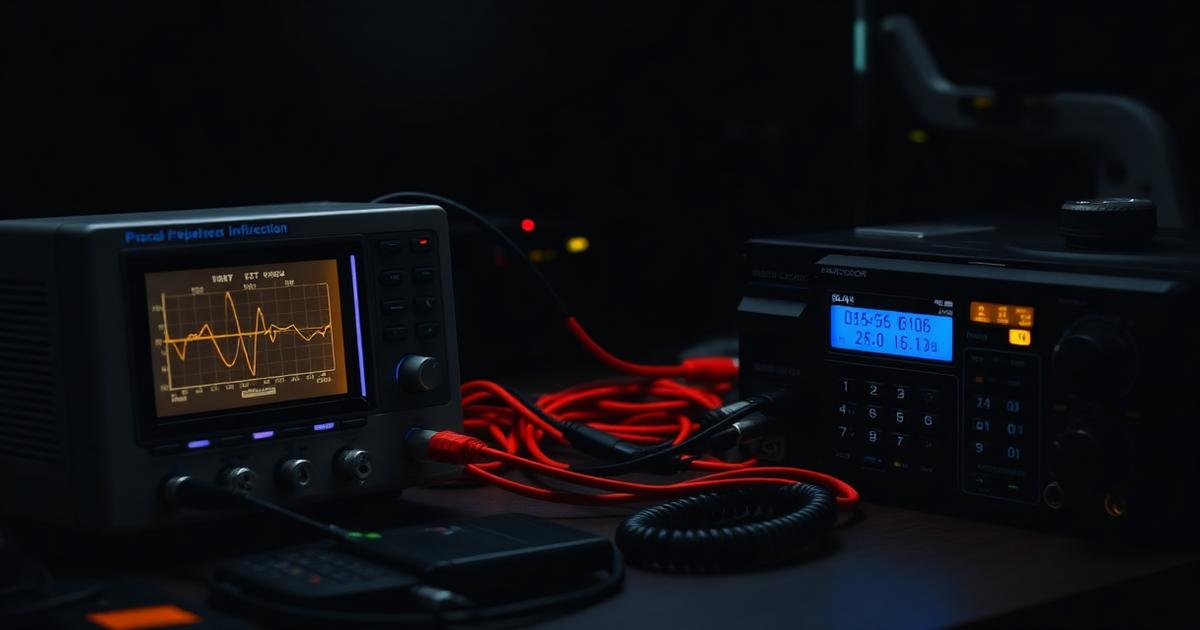
Your noise floor is not the ionosphere's fault
New HF operators often blame propagation for a band that seems constantly noisy. Weak signals disappear into a constant hash of buzzes, clicks, and warbles that never quite go away. The temptation is to assume the ionosphere is having a bad decade, or that the antenna is somehow inadequate, and to spend money accordingly. The much more common truth is that most of the noise is coming from inside your own house, and it can be found and eliminated in an afternoon with no test equipment more expensive than the radio you already own.
The residential radio-frequency environment has become dramatically noisier over the last twenty years. Cheap switching power supplies are in every wall outlet, LED bulbs are in every socket, and consumer electronics generate broadband noise as an unwanted byproduct of their normal operation. Ham radio equipment is uniquely sensitive to all of it because our receivers are designed to hear signals that are, by consumer standards, absurdly weak.
The diagnostic order that always works
Start by throwing the main circuit breaker for your house. Everything electrical goes off, including your battery-powered radio, which you have connected to a battery for this test. Listen to the band you were curious about. If the noise is gone, it is your house. If it is still there, it is either your neighbor's house or a natural source, and the tools change.
Assuming the noise is yours, turn the main breaker back on and start flipping individual breakers off one at a time, listening after each. Within twenty minutes you will identify the circuit or two that carries the offender. Then, walk the rooms on that circuit and unplug devices one at a time. Within another twenty minutes you will have found the specific power supply, LED bulb, or electronic device generating the noise.
This procedure sounds tedious. It takes less time than one more evening of confused DX chasing, and once you have done it, you can never blame the ionosphere for the wrong problem again.
The usual suspects, ranked
Cheap LED light bulbs are by far the leading source of modern residential RFI. Not all of them, but many. The fix is to buy a slightly more expensive, brand-name bulb rated for low electromagnetic emissions. The difference in bulb price is nothing compared to the difference in your receive quality.
Switching-mode wall warts, especially the small unregulated ones that came free with cheap electronics, are the second most common source. Replace with a linear supply for anything that lives near the radio.
Plasma televisions are almost extinct, but if you still have one, it can obliterate the 40 meter band from the moment it turns on.
Electric fences, invisible dog fences, and doorbell transformers are chronic noise sources you may not have thought about. Ethernet-over-power adapters are notoriously bad. Solar power inverters, especially older ones, can be a strong source of daytime noise; the fix is a professional retrofit with a compliant inverter.
Common-mode currents, the invisible problem
Even after you have eliminated the sources inside your house, some residual noise will remain, coupled onto your feedline as common-mode current riding along the outside of the coax shield. This is the noise that gets worse when you touch the radio, changes when the microphone is moved, and generally behaves like it is doing something magical. The fix is a common-mode choke at the feedpoint of the antenna and, often, another one at the point where the coax enters the shack. A good choke is a piece of coax wound through a stack of high-permeability ferrite cores; commercial units run about fifty dollars and are worth every cent.
RFI from your station into other people's equipment
RFI runs both ways. Your transmitter, especially at HF power levels, can and will cause interference to nearby consumer electronics that are not properly shielded. When a neighbor reports interference, the initial diagnostic is the same on their side as yours: is the interference specifically when you key up? If yes, the fix is almost always adding a snap-on ferrite choke to the power or audio cable of the offending device. A ten-dollar box of assorted chokes lives permanently in most operators' junk drawers for this reason.
The FCC and its international equivalents take good-neighbor RFI resolution seriously, and the ARRL publishes clear guides on how to handle a complaint politely and effectively. In practice, most disputes end with a friendly visit, a handful of chokes, and both parties agreeing that the problem was in the consumer device rather than the radio.
The one habit that keeps your shack quiet
Every time you add a new piece of electronics anywhere in your home, put it on the same test: turn on your HF radio, tune around, then plug the new device in and see if the noise floor rises. If it does, decide immediately whether to return the device, fix it with a choke, or move it to a distant circuit. Do this every time, without exception, and your noise floor will stay at the same level in year ten as it was on the day you first built the station. That kind of quiet is the most valuable upgrade in amateur radio, and it is entirely free.
Every HAMSTATION tool runs entirely client-side. No accounts, no tracking, no server storage.
Open the toolkit →