QRP Operating: Doing More With Five Watts
Cutting power from a hundred watts to five costs thirteen decibels. Here is why that matters far less than beginners expect, and how to make it work.
Five watts is not a handicap
The first reaction to QRP operating is disbelief. A hundred watts already feels modest against the kilowatt stations that dominate a contest weekend, so deliberately transmitting five watts sounds like an exercise in frustration. Then you meet an operator who has worked a hundred countries with a radio the size of a paperback and a wire in a tree, and the disbelief has to be reorganized into something more useful: an understanding of what power actually buys.
The number to internalize is thirteen. Dropping from a hundred watts to five watts is a reduction of thirteen decibels, which is real but not catastrophic. On the receiving end, thirteen decibels is roughly two S-units on a meter that is not to be trusted anyway. It is the difference between a comfortable signal and a workable one, not the difference between being heard and being invisible. Under decent conditions the station on the other end frequently cannot tell the difference without being told.
What the decibels actually say
Put the thirteen decibels in context with the other variables in the path. Raising a low dipole from fifteen feet to thirty-five feet on 20 meters can change the signal at a distant station by six to ten decibels. Replacing lossy coax on a VHF run can recover three or four. A three-element beam pointed at the other station is seven decibels better than a dipole. A quiet receive location instead of a noisy one can be worth ten decibels of effective signal-to-noise.
Add those up and the arithmetic becomes clear: the thirteen decibels you gave up by running low power is comparable to a single antenna improvement, and antenna improvements help your receiving as well, which power never does. A QRP station with a good antenna in a quiet location routinely outperforms a hundred-watt station with a compromised antenna in a noisy suburb. That is not a moral claim about the hobby; it is a link budget.
Where QRP works and where it does not
QRP is at its best on CW and digital modes, on bands that are open, from locations with low noise, into antennas that are efficient. Under those conditions it works so well that operators forget they are running low power. It is at its worst on SSB into a pileup, on marginal paths during a solar minimum, from a noisy apartment with an indoor antenna, and in any situation where the other station is fighting through interference and needs signal margin to spare.
Be honest about which situation you are in. Calling a rare DX station in a four-hundred-deep pileup with five watts of SSB is technically possible and statistically unrewarding. Working the same station on CW, split, two kilohertz above the crowd, at a moment when the sweep is passing, is a genuinely reasonable proposition. The mode and the technique matter far more at low power than at high power, which is exactly why QRP operators tend to be excellent operators.
The antenna is the amplifier
Every serious QRP operator arrives at the same conclusion: the money and effort belong in the antenna. A resonant, efficient, well-sited antenna is the amplifier, and it is the only amplifier that improves reception too. In practice this means a full-size resonant wire rather than a shortened loaded whip, height rather than convenience, and a real radial field under any vertical.
It also means paying attention to losses that a hundred-watt station can afford to ignore. A decibel lost in a mediocre coax run is a decibel you cannot spare. A lossy transformer in an end-fed antenna, a tuner working hard to match a difficult load, a corroded connector, a common-mode current problem stealing power into the feedline: each of these is a small tax at a hundred watts and a meaningful one at five. Sweep everything, fix what you find, and use the HAMSTATION SWR calculator to convert reflection numbers into actual power figures so you can decide what is worth chasing.
CW and digital: the modes that make QRP easy
The single biggest multiplier available to a QRP operator is mode choice. Narrowing the required receiver bandwidth from 2.4 kilohertz for SSB to 200 hertz for CW improves the signal-to-noise ratio by about eleven decibels, which almost exactly cancels the thirteen decibels lost by dropping from a hundred watts to five. In effect, a five-watt CW signal arrives at a well-equipped receiver in roughly the same condition as a hundred-watt SSB signal.
Digital modes push further. FT8 decodes far below the level at which a human can hear anything at all, which is why five watts of FT8 works reliably on bands that sound completely dead. The tradeoff is the structured, minimal exchange, but for confirming a path, chasing grids, or working a new country from a difficult location, it is unbeatable. Most QRP operators end up fluent in both CW and one digital mode, and treat SSB as the mode for local conversations where signal margin is plentiful.
Operating technique for low power
Send your call sign clearly and completely, then stop and listen. Answer other people's calls instead of only calling yourself, because answering a station that is already listening is the highest-probability contact available. Work the bands when they are actually open rather than when it is convenient, which means paying attention to greyline, band openings, and the propagation indicators. Point a directional antenna if you have one, and if you do not, remember that a dipole has a broadside preference worth knowing about.
Above all, be patient in a specific way: give the other operator time. A weak signal often needs a second pass before it is copied, and a station that repeats its call sign once more after a pause is frequently the one that gets through. Operators who treat every unanswered call as failure tend to give up on QRP within a month. Operators who treat it as a slower rhythm keep doing it for decades.
Building versus buying
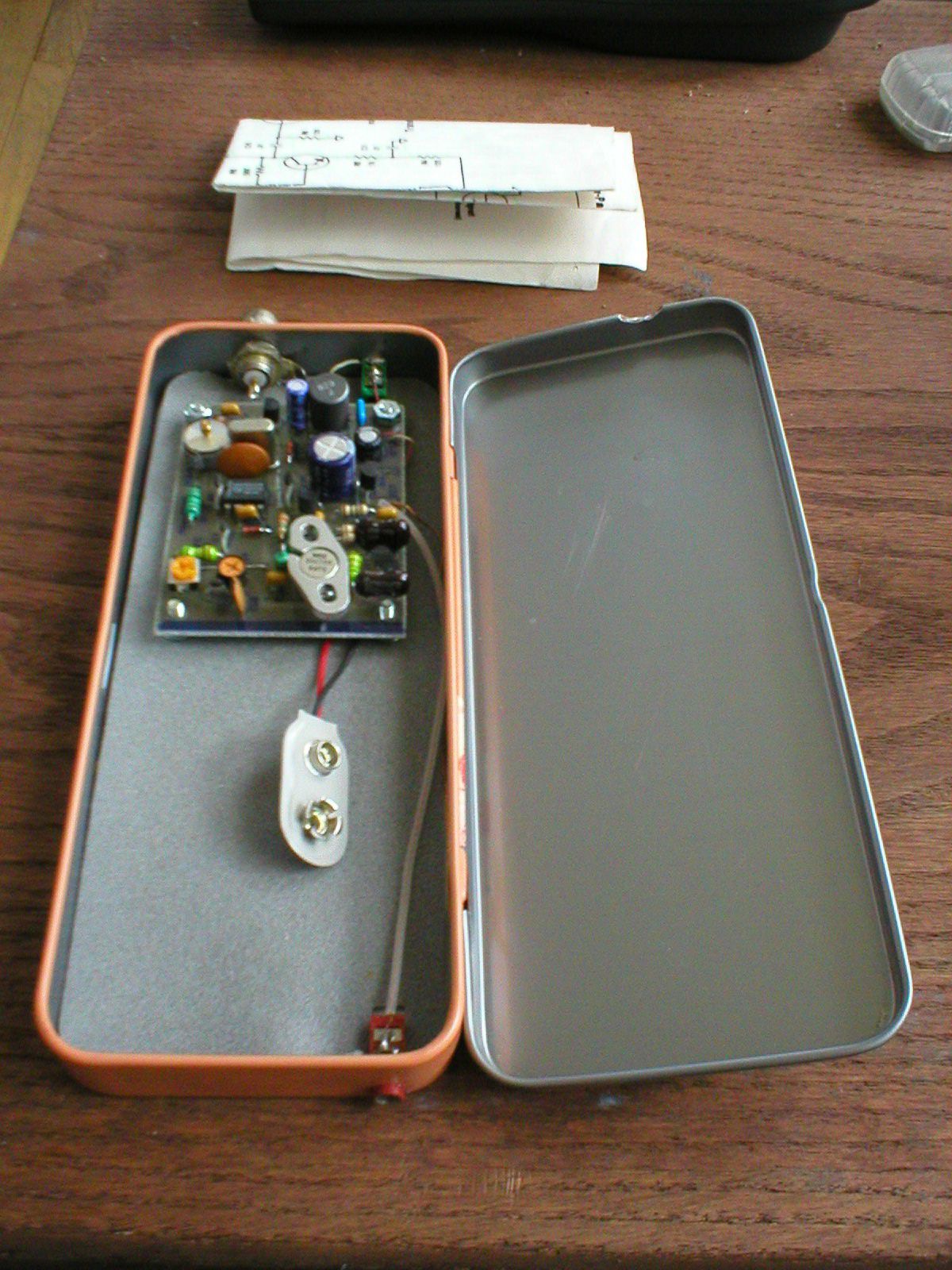
QRP is the last corner of amateur radio where homebuilding is mainstream rather than nostalgic. A single-band CW transceiver is a genuinely achievable weekend kit, the parts cost is small, and the experience of making a contact with a radio you assembled yourself is the reason a surprising number of engineers exist. Kits range from simple single-band designs to sophisticated multiband radios with full digital signal processing.
Commercial QRP radios have also become excellent, with general-coverage receivers, built-in antenna tuners and analyzers, and battery life measured in days. If your goal is operating, buy one and spend your effort on antennas. If your goal is understanding, build one first and buy the second. Both paths lead to the same place, which is an operator who knows exactly what every decibel in their station is doing.
A realistic first month
Set up five watts of CW into whatever antenna you already have, and commit to answering calls rather than making them for the first two weeks. You will make contacts on the first evening if the band is open, and you will discover which bands your antenna actually works on, which is often not the ones you assumed.
Then change exactly one thing at a time and log the result. Raise the antenna ten feet. Add a common-mode choke. Move the operating time an hour later toward greyline. Each of those is worth measurable decibels, and because you are running low power, you will notice every one of them. That feedback loop is the real reason people stay with QRP: it makes the physics of the hobby immediately visible in a way that a kilowatt never does.
Every HAMSTATION tool runs entirely client-side. No accounts, no tracking, no server storage.
Open the toolkit →