QSL Cards, LoTW, and Chasing Awards Without Losing Your Mind
Confirmations are the paper trail of your on-air life. Here is how the modern awards ecosystem works and how to participate without paperwork burnout.
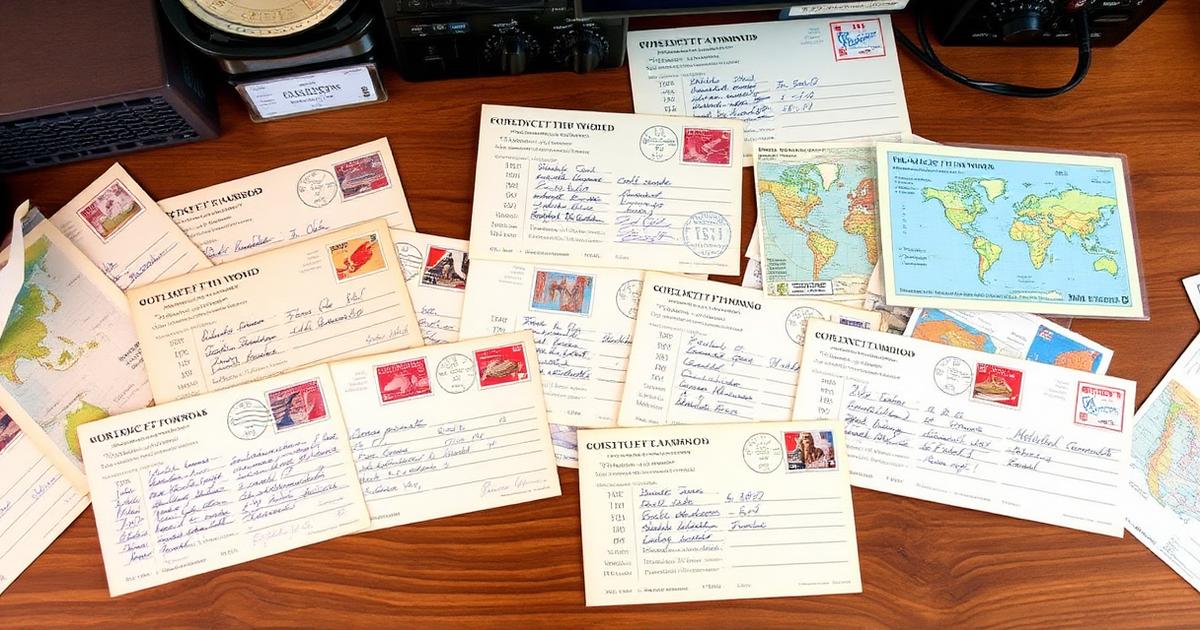
Why confirmations exist
Every ham radio contact is inherently unverifiable at the moment it happens. You called somebody, they called back, and now you have an entry in your log. Neither party has physical proof that the other actually heard them. The entire century-old system of QSL cards, and its modern electronic replacements, exists to close that gap. A confirmed contact is one where both stations have logged the same details and each has evidence, on paper or on a trusted server, that the other party agrees the contact took place.
This matters because most amateur radio awards require confirmations, not just logged contacts. Working every country in the world means nothing for the DXCC award unless the operators on the other end have confirmed the contacts back to you. The traditional currency of that confirmation is the QSL card; the modern currency is the Logbook of the World, or LoTW.
The card, and why it endures
A QSL card is a postcard-sized document with your call sign, your grid, and the details of a specific contact on it. You send one to the other operator, they send one back, and both cards live in a shoebox for the next fifty years. This system has worked continuously since the 1920s. It is slow, it costs postage, and it produces a physical artifact that no digital system has quite managed to replace as a keepsake.
Most operators still print cards for special contacts, DX contacts, or DXpeditions. The economics of paper cards make no sense for a station that makes a thousand contacts a month; the emotional pull of receiving a card in the mail from a country you have never visited is why the system persists anyway.
LoTW, in one page
Logbook of the World is the ARRL's electronic confirmation system, and it has become the dominant confirmation platform in modern amateur radio. You install a small program on your computer, request a certificate that ties your call sign to your verified identity, sign your log entries with that certificate, and upload the signed log to the LoTW server. When another LoTW user uploads matching entries for the same contacts, the system automatically records confirmations for both of you.
The initial setup takes an evening and requires the ARRL to send you a postcard with a code on it, which is their way of verifying your address. Once set up, the system is nearly invisible in daily operation: your logging software uploads new contacts automatically, and confirmations arrive in your account whenever the other party uploads their side.
Nearly every serious DX chaser and contester now uses LoTW. Awards that used to require years of paper card collection can now be completed in months.
The awards to know about
The Worked All Continents award is the traditional first goal for new HF operators: confirm one contact with each of the six inhabited continents. Most operators reach this within a year of getting on HF.
The DX Century Club, or DXCC, is the classic long-term goal: 100 confirmed entities from a curated list of about 340. Reaching DXCC takes most operators several years of consistent operating and marks the point at which you are no longer a beginner on the DX bands.
The Worked All States award requires confirming a contact with each of the fifty US states. Achievable in a few contest weekends with modest equipment.
The Grid Square awards, coordinated by the ARRL and CQ Magazine, focus on Maidenhead grid squares and are heavily favored by VHF, UHF, and satellite operators.
Awards without paperwork burnout
The single trap that turns awards from motivating to exhausting is treating them as bookkeeping. You cannot enjoy the on-air experience if you are constantly stopping to file paperwork. The right rhythm is to log contacts as you make them, upload to LoTW at the end of every operating session, and check your accumulated confirmations at the end of each month. Do not chase individual confirmations. Trust the system and let the awards accumulate in the background.
The one exception is DXpeditions. A rare entity that will be on the air for one week only is worth chasing carefully, uploading promptly, and, if you value paper, sending a card to the QSL manager listed on the DXpedition's website with a self-addressed stamped envelope. That specific card, when it arrives, will be one of the most satisfying pieces of mail you ever receive.
A quiet suggestion
Print one hundred QSL cards with your call sign, your grid, a photograph of your station, and a small design you actually like. Use them sparingly for special contacts, DX QSOs, and any operator who takes the time to send you one first. Log everything to LoTW as a matter of course. Six years from now, when a card arrives from a country you had almost forgotten you worked, you will remember why the paper part of the hobby refuses to die.
Every HAMSTATION tool runs entirely client-side. No accounts, no tracking, no server storage.
Open the toolkit →