Radio Direction Finding: Foxhunting, ARDF, and Tracking Real Interference
The skill that lets you find a hidden transmitter in a park is the same one that finds the noise source killing your receiver. Here is how it works.
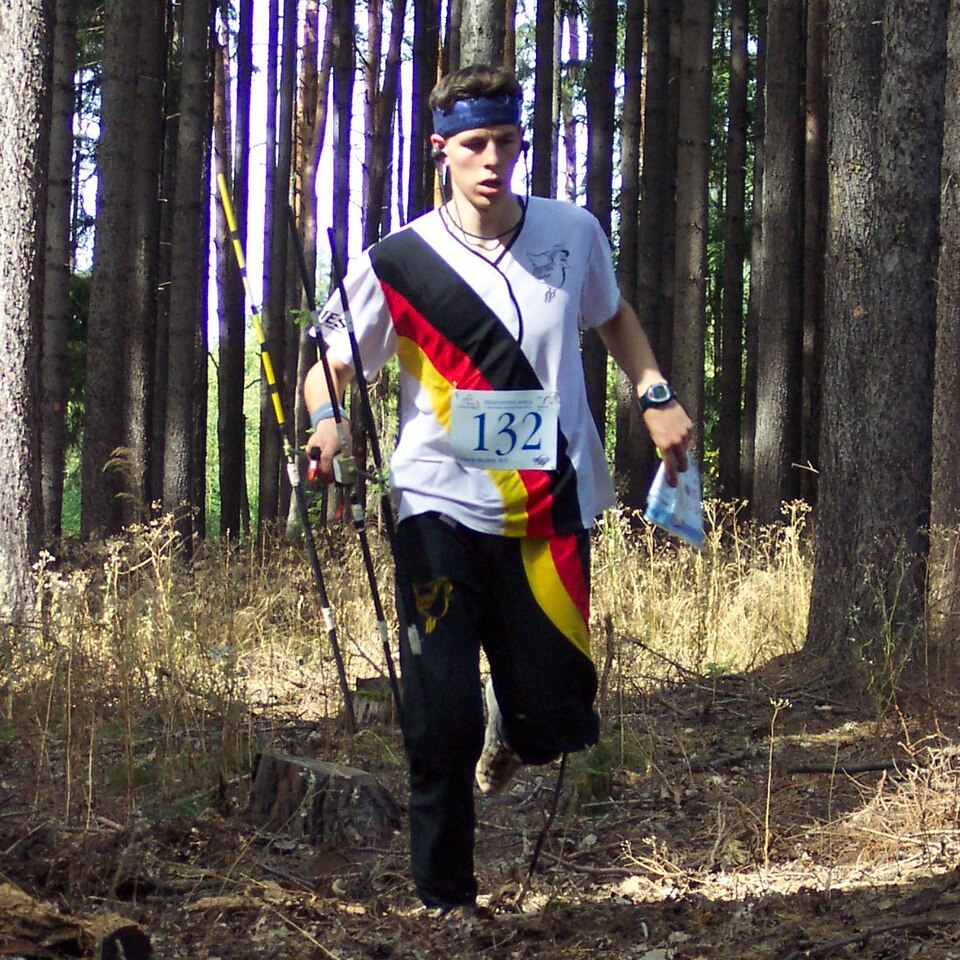
A game that turns into a public service
Somewhere near you, on a weekend morning, a small group of people are walking through a park holding small antennas and staring at handheld radios. They are looking for a hidden transmitter, and they are playing one of the oldest games in amateur radio. It looks like a peculiar hobby within a hobby, and it is, but it is also the single most directly useful skill the hobby teaches, because the technique that finds a deliberately hidden transmitter is exactly the technique that finds a malfunctioning device jamming a repeater, a stuck transmitter on a public safety channel, or the power-line arc destroying your own receive performance.
Direction finding rewards a specific kind of thinking that is hard to learn from a book: reasoning about signal strength, reflections, and geometry while walking around in the real world. Two hunts will teach you more about how radio waves actually behave in terrain and buildings than a semester of theory.
How direction finding actually works
The basic principle is that a directional antenna receives more strongly from some directions than others, so rotating it and noting where the signal peaks gives you a bearing. That is the whole idea, and in an open field with one transmitter it works beautifully.
Reality is less obliging in two ways. First, most simple antennas have a broad forward lobe, so the peak is a vague thirty-degree region rather than a line. This is why experienced hunters often use the null instead: a small loop antenna has a sharp, deep null perpendicular to its plane, and a sharp null gives a much more precise bearing than a broad peak, at the cost of an ambiguity of exactly 180 degrees which you resolve by moving.
Second, radio waves reflect. Buildings, water towers, metal fences, and terrain all produce reflections, and a reflection arrives from a direction where there is no transmitter. In an urban hunt you will frequently get a confident, repeatable bearing that points at a building rather than at the fox. The cure is not a better antenna; it is taking bearings from multiple widely separated locations and trusting the pattern rather than any single reading.
Antennas for the hunt
Three designs cover almost everything. A small handheld yagi, typically three elements on 2 meters, is the standard tool: it gives useful forward gain, a workable pattern, and enough directivity to point at something. A tape-measure yagi built from a scrap of steel tape and PVC is the classic homebrew version, costs almost nothing, folds up for transport, and performs remarkably well.
A loop antenna, either a shielded magnetic loop or a simple wire loop, gives the sharp nulls that make precise bearings possible, and it is particularly good for the final approach. A body-shielded whip is the crudest method and works better than it should: hold a handheld against your chest and turn slowly, and your own body attenuates the signal from behind you enough to indicate a direction. Every hunter ends up using all three at different stages of the same hunt.
Attenuators and the strong-signal problem
The hardest part of a hunt is not finding a faint signal; it is the last hundred meters, when the signal is so strong that the receiver saturates and every direction reads full scale. A directional antenna is useless when the front end is overloaded, and beginners spend a great deal of time circling a transmitter they are standing almost on top of.
The fix is attenuation. A simple step attenuator between antenna and radio, switchable in ten-decibel steps up to sixty or more, restores the ability to see a peak or a null. An offset attenuator is a cleverer variant that mixes the incoming signal with a local oscillator so that even a very strong signal can be reduced without leaking around the attenuator through the radio's case, which is a real problem at close range. Building one is a pleasant afternoon project and it transforms the endgame of every hunt.
Triangulation on paper and in practice
The textbook method is to take bearings from two or three widely separated points, draw them on a map, and find the intersection. In practice, do exactly that but treat each bearing as a wedge rather than a line, and expect the intersection to be a region rather than a point. Three bearings from well-separated positions almost always produce a usable area; two bearings from positions close together produce an argument.
The practical technique that works best combines coarse triangulation with a hot-and-cold approach. Get two rough bearings, drive or walk to the indicated area, then switch to signal-strength hunting: move in a direction, watch whether the signal rises or falls, and correct. Use the HAMSTATION Maidenhead locator converter to record where you took each bearing so that you can plot them properly afterwards, which is also how you build the skill of judging which bearings were trustworthy.
Foxhunts, ARDF, and competitive RDF
Local clubs run informal foxhunts, usually a hidden transmitter on 2 meters somewhere within a defined area, with participants competing on elapsed time. They are social, forgiving of inexperience, and the fastest way to learn, because you can watch what the experienced hunters do and copy it.
Amateur Radio Direction Finding is the formal international sport, combining orienteering with direction finding across a course of several transmitters on 80 meters or 2 meters, on foot, against the clock. It is a genuine athletic event with world championships, and the equipment is specialized and beautifully engineered. You do not need any of that to start; you need a handheld, a homemade yagi, and a Saturday morning.
Hunting real interference
The same skills applied to a noise problem are worth real money. Power-line noise, the most common serious source, has a characteristic buzz synchronized to the mains frequency and radiates from a specific hardware fault: a cracked insulator, a loose tie wire, a failing arrester. Hunting it usually means working on the AM broadcast band or on VHF with a directional antenna, driving slowly, and finding the pole where the noise peaks. Utilities generally respond well to a report that identifies a specific pole number, and very poorly to a complaint that the neighborhood is noisy.
Inside the house the same logic applies at a smaller scale, and it pairs with the breaker-flipping method: use direction finding to establish which part of the property, then use circuit isolation to establish which device. Between the two techniques, essentially every residential noise source can be located in an afternoon.
Your first hunt
Bring a handheld with a signal-strength display, a homemade or borrowed yagi, an attenuator if you can get one, a paper map, a pen, and water. Take a bearing, write it down with your location, move at least a few hundred meters, take another, and only then start walking toward the intersection. Expect to be misled by one reflection and expect to overshoot at close range, because everyone does both on their first attempt.
When you find the transmitter, note what fooled you and where. Direction finding is almost entirely pattern recognition built from experience, and the errors are the curriculum. Three hunts in, you will be reading terrain and reflections without thinking about it, and the next time your receiver develops a mysterious buzz you will treat it as a solvable problem rather than a fact of life.
Every HAMSTATION tool runs entirely client-side. No accounts, no tracking, no server storage.
Open the toolkit →