Repeaters and VHF/UHF Etiquette: Sounding Like You Belong
The local repeater is where most new operators start. Learn the rhythm, the words, and the small courtesies, and you will fit in from the first transmission.
Why the repeater is the front door
Almost every new ham makes their first contact on a local VHF or UHF repeater. It is the most forgiving corner of the hobby: the signal is strong, the coverage is predictable, the same people are there every evening, and the pace is conversational rather than transactional. If you are looking for the community of amateur radio in your town, it is almost certainly gathering on one or two repeater frequencies right now.
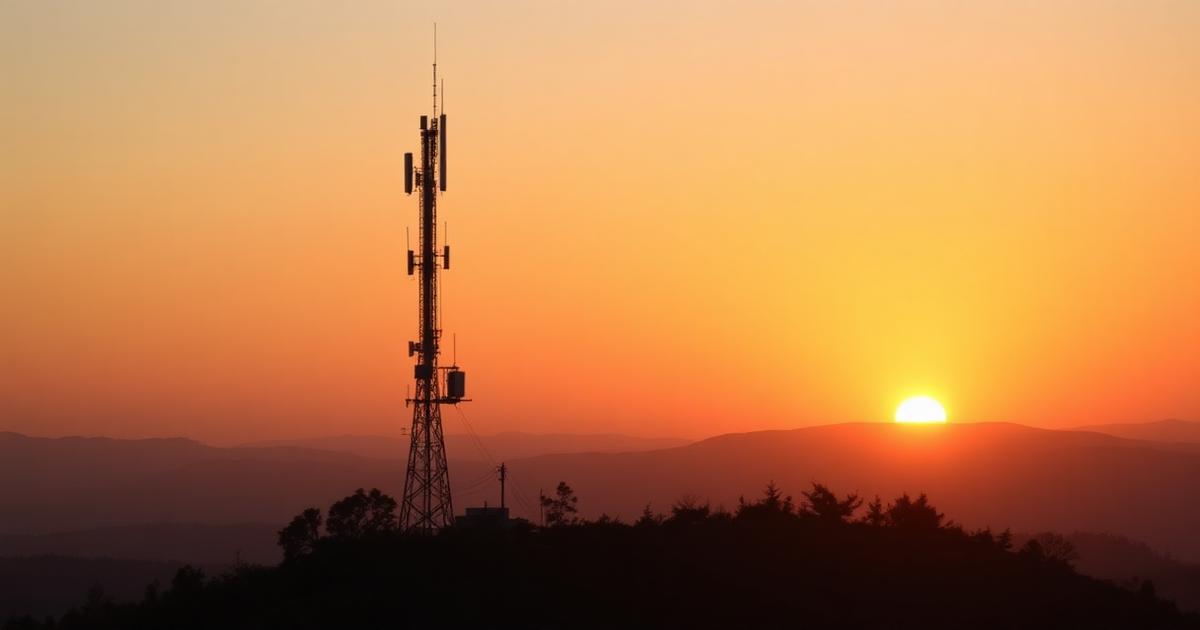
Repeaters exist because VHF and UHF signals travel by line of sight, which means a handheld radio in a valley cannot reach another handheld two ridges over. A repeater on a nearby hilltop hears both radios and rebroadcasts everything it receives, extending the range from a few miles to tens or even hundreds of miles depending on the terrain. All of this happens automatically, funded and maintained by volunteer clubs, and you are invited to use it.
The technical part in one page
A repeater listens on one frequency, called the input, and transmits on another, called the output. Your radio must transmit on the input and receive on the output. This is done automatically on any modern radio by entering the repeater's output frequency, setting the offset to the correct sign and magnitude, and enabling any required subaudible access tone. In the United States, the standard 2 meter offset is 600 kilohertz, plus or minus depending on the frequency. On 70 centimeters it is 5 megahertz.
Access tones, called CTCSS or PL tones, are quiet subaudible pitches your radio sends alongside your voice to open the repeater's squelch. The exact tone for each repeater is published on RepeaterBook and similar sites. Set it once when you program the memory and forget about it.
The first three transmissions
The single hardest transmission in your amateur career is the one that comes right after your license arrives, when you sit in a parked car with a handheld and cannot bring yourself to key up. Here is the script for the first three: press the button, wait a full second so the repeater fully keys, and say your call sign followed by the word monitoring. That is it. Release the button, wait, and if someone answers, greet them politely and ask how they are hearing your signal. Almost every net control and repeater regular will be delighted to hear a new call sign, and the conversation from there is easier than any first phone call to a stranger.
If no one answers, that is normal. Try again in a few minutes. Or check into the next scheduled net, which is a moderated on-air meeting with a specific starting time, published on the club website. Nets exist precisely so new operators have a low-pressure place to say hello.
The rhythm and the small courtesies
Give the repeater a full second to key before you start talking. Let each transmission complete before you press the button. Wait for the courtesy tone or the repeater's tail to drop before responding, so any station with a genuine emergency can break in. Announce your call sign at the start of a conversation and every ten minutes thereafter. Do not use unnecessary phonetics on a strong local repeater, but do use them any time your signal is questionable.
The words to avoid, mostly because they mark you as a CB operator rather than a ham: breaker, roger that, ten-four, over and out. The words to embrace: monitoring, this is, clear, seventy-three. None of it is compulsory. All of it is a small courtesy that signals you have listened before you spoke.
Beyond the local repeater
Once your local machine feels comfortable, explore linked systems such as AllStar, EchoLink, and DMR networks that connect repeaters across regions or continents. Talk to a local operator sitting in the same city as you and, in the same session, an operator in Australia through a linked node. Try simplex, meaning direct radio-to-radio without a repeater, on the calling frequencies 146.52 in the US and its equivalents elsewhere; simplex work forces you to think about antennas and terrain in ways repeaters hide.
Program your handheld with your ten favorite local repeaters, one simplex calling channel, and the two nearest weather radio channels. The HAMSTATION repeater offset calculator will tell you the correct input frequency for any output, and the Q-code lookup will translate the shorthand you will hear on the more chatty machines. Six months from now, the repeater will feel less like a broadcast and more like a room full of neighbors, which is exactly what it is.
Every HAMSTATION tool runs entirely client-side. No accounts, no tracking, no server storage.
Open the toolkit →