Software Defined Radio: A Practical Primer for Amateurs
SDR turned every laptop into a spectrum analyzer. Here is what it is, why it changed the hobby, and how to get started for under thirty dollars.
What SDR actually is
A software-defined radio is a receiver, and sometimes a transmitter, in which the analog work of tuning, filtering, and demodulating is done in software running on a general-purpose computer instead of dedicated hardware. In practical terms this means a small USB dongle can present the entire radio spectrum from a few megahertz up through a couple of gigahertz to your laptop, and any application on the laptop can decode any signal in that range.
The consequences of this shift are still working their way through the hobby. A twenty-dollar RTL-SDR dongle originally designed for European television reception can now serve as an all-band scanner, an aircraft ADS-B receiver, a weather satellite station, a panadapter for your existing HF radio, and a starting point for any experiment involving unusual modulation. Ten years ago each of those jobs required dedicated equipment.
The three tiers of SDR hardware
At the entry tier are RTL-SDR dongles, priced around twenty to thirty dollars, receive-only, covering approximately 24 megahertz to 1.7 gigahertz. Perfect for learning the concepts, listening to VHF and UHF signals, decoding aircraft transponders, and pulling weather satellite images out of the air. They are not sensitive enough for serious HF work without an upconverter.
At the middle tier are dedicated amateur receive SDRs such as the SDRplay and Airspy families, in the two hundred to five hundred dollar range, with better dynamic range and full HF coverage without an upconverter. These are the modern replacement for a general coverage communications receiver and, when paired with a good antenna, outperform many premium tabletop radios from twenty years ago.
At the top tier are transceivers such as the HackRF, PlutoSDR, and full transceive rigs from manufacturers like Icom, Yaesu, and Flex, in which the radio itself is essentially an antenna, a preselector, and an analog-to-digital converter feeding a powerful computer. These are the direct future of amateur transceivers and are already the dominant architecture in serious contest and DXpedition stations.
What SDR gives an operator
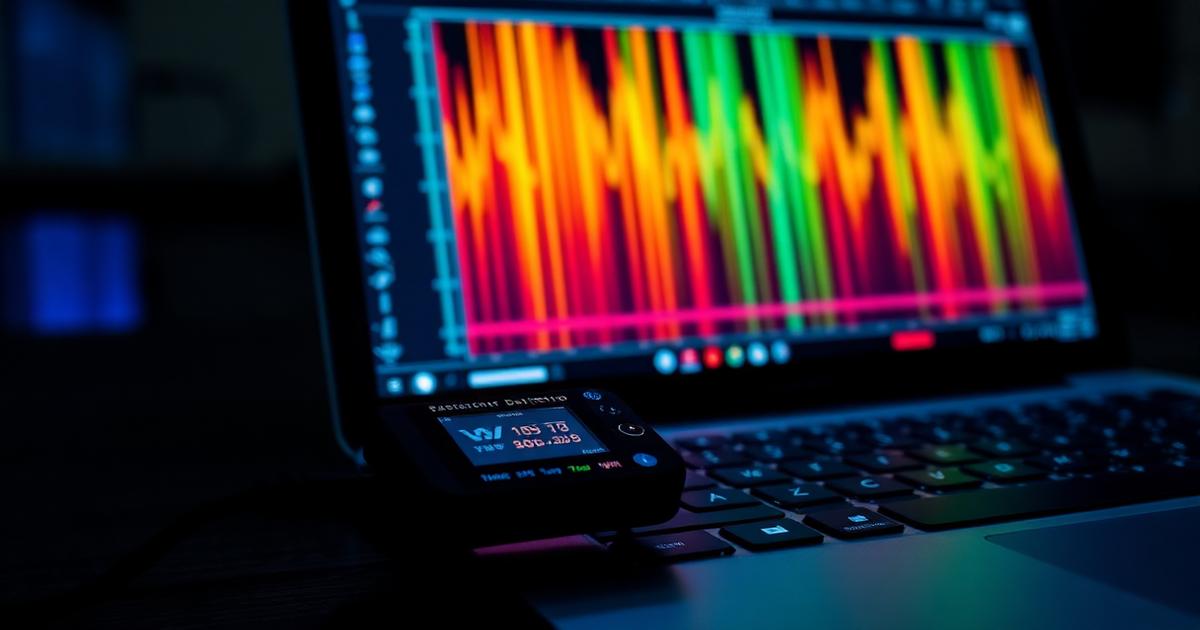
The first thing every new SDR user notices is the waterfall display. Instead of tuning across a band one frequency at a time, you see the whole segment at once, with every active signal drawn as a bright line moving down the screen. Pileups, DX stations, ragchews, digital signals, and interference all become visually obvious. You start hearing the band the way an experienced operator has always heard it: as a landscape rather than a single point.
The second gift is the ability to record entire chunks of the spectrum for later replay. You can capture a whole contest weekend to disk, then, days later, tune around the recording as if it were live, work every station you missed on the first pass, and check every call sign at leisure. This changes the nature of DXing and contesting for anyone willing to invest in the storage.
Getting started this weekend
Buy a modern RTL-SDR v3 or v4 dongle with an included antenna. Download SDR++ or SDR#, which are free and cross-platform. Install it, plug in the dongle, tune to the local FM broadcast band, and confirm you can decode a music station. From there, tune to the local air traffic control tower frequency and confirm you can hear pilots. Now try VHF weather satellite frequencies during a pass and, with a small QFH antenna, decode a full weather image within a couple of orbits.
For HF work, either buy an upconverter such as the Ham-It-Up, or step up to a dedicated HF-capable SDR. Point it at an outdoor wire antenna, and you have a general coverage HF receiver comparable to a mid-range tabletop rig from a decade ago, for a fraction of the price.
The bigger picture
Software-defined radio is not a niche within the hobby. It is the future architecture of nearly every amateur transceiver, and learning to think in terms of samples, filters, and demodulators in software will make you a better operator on any modern radio, SDR or not. The HAMSTATION frequency calculator and band plan reference are useful companions when exploring an unfamiliar segment; combined with a five-dollar antenna and a twenty-dollar dongle, they will let you explore more spectrum in a weekend than most operators used to see in a decade.
Every HAMSTATION tool runs entirely client-side. No accounts, no tracking, no server storage.
Open the toolkit →